
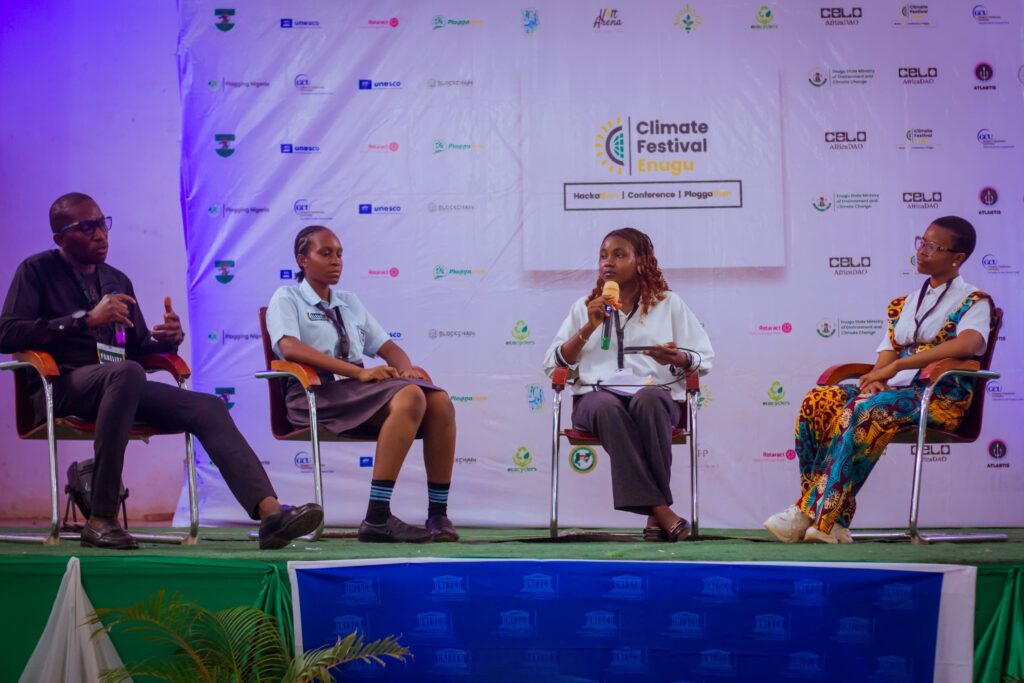
At the Climate Festival Enugu 2025, organized by Plogging Nigeria, I was invited to speak on a panel titled “Bag? Bin?? Ban?? Beating Plastic Pollution in Nigeria”
The session focused on a question many of us keep returning to: how do we beat plastic pollution in a way that actually works?
This article captures the key ideas I shared during that conversation.
What exactly is plastic?
Plastic is any material produced from petroleum through chemical processes. It is used to make many everyday items, including bottles, bags, packaging, and electronics. There are different types of plastic, and they do not all behave the same way when discarded.
Some common types include:
- PET, used for water bottles
- HDPE, used for detergent containers
- PVC, used for pipes and packaging
- LDPE, used for plastic bags
- PP, used for bottle caps and straws
- PS, commonly known as styrofoam
- Multi-layered plastics, which are often difficult or impossible to recycle
Understanding these differences matters, especially when we talk about bans and recycling.
The state of plastic pollution
Globally, more than 400 million tonnes of plastic are produced every year, and about half of this is single-use. Less than 10 percent of plastic waste is recycled. Over time, plastic has entered our food systems, with microplastics now found in fish, soil, and even human blood.
In Nigeria, the situation is just as worrying. The country generates about 2.5 million tonnes of plastic waste each year. Lagos alone accounts for roughly 870,000 tonnes. Weak waste collection systems mean plastics often end up blocking drainage channels, contributing to flooding. Styrofoam containers and sachet water nylon are major contributors.

Should Nigeria ban single-use plastics?
States like Lagos and Abia have introduced bans on styrofoam, and these efforts are a good place to start. Styrofoam is one of the most difficult plastics to recycle and does not break down easily in the environment.
However, the bigger question is whether a total and sudden ban on single-use plastics is sustainable.
My view is that phasing out single-use plastics is more effective than an outright ban. Sudden bans without alternatives in place make it harder for small businesses and everyday consumers to adapt.
Phasing out single-use plastics allows time to:
- Develop affordable alternatives such as paper packaging, biodegradable containers, or reusable systems
- Help businesses adjust without being pushed out of operation
- Educate people and encourage new habits
- Build recycling and reuse systems that can support the transition
Without these foundations, the same problems are likely to return, even after a ban.
The role technology can play
Technology can support the fight against plastic pollution, especially in tracking and accountability. Tools built on digital and blockchain systems can help monitor progress, support responsible producers, and reward individuals and communities that reduce or recycle plastic.
Technology alone will not solve the problem, but it can strengthen systems that already work.
Engaging universities and communities
People are more likely to act when they feel involved, not blamed.
Universities can play an important role by:
- Creating green clubs that run plastic audits, upcycling projects, and cleanups
- Partnering with academic departments for research and local solution development
- Using simple reward systems to encourage recycling and volunteering among students
Communities also matter:
- Youth-led groups like Plogging Nigeria can continue to lead cleanups and awareness campaigns
- Recycling can be encouraged through incentives for sorting and returning plastic waste
- Market women, artisans, and religious groups should be involved because they are trusted voices
Solutions work better when they are rooted in local structures and relationships.

We have talked about this for years. What needs to change?
Conversations alone are not enough. To make real progress, ideas must be followed by action.
This includes:
- Stronger policy enforcement
- Investment in waste management and recycling infrastructure
- Partnerships between the government, the private sector, technology builders, youth groups, and communities
- Support for businesses already working on plastic waste solutions
Everyone has a role to play, and progress depends on collaboration.
One lesson I shared with the audience
Before the session ended, I shared one lesson I believe we should not forget:
Beating plastic pollution is about getting everyone in the chain, from government to businesses to individuals, actively involved in the solution.
Until our systems reflect shared responsibility, we will keep revisiting the same conversations without lasting change.
