
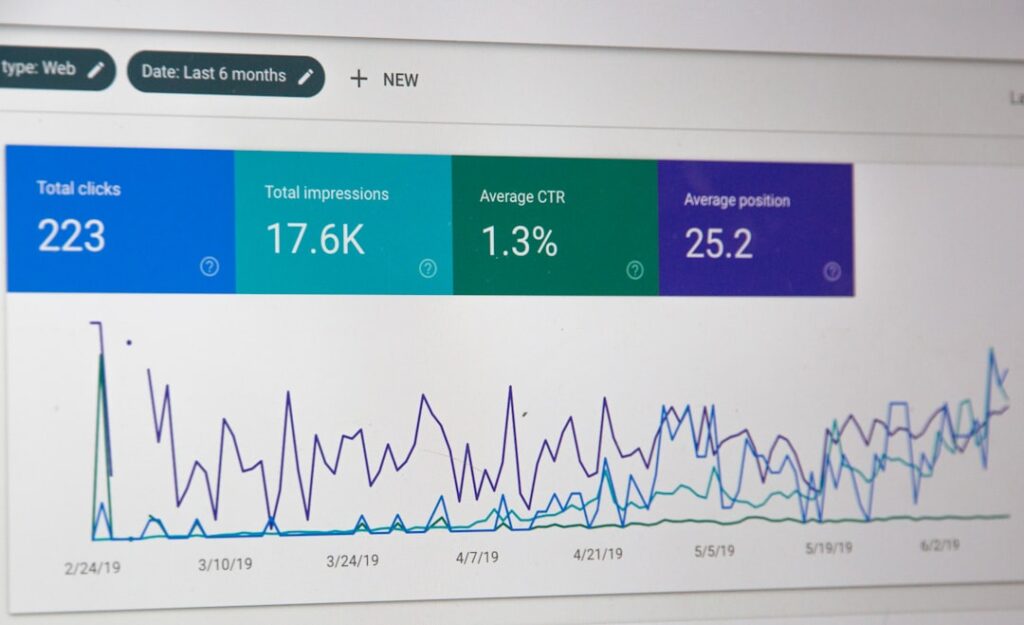
How do you know if your marketing strategy is truly working? Guesswork or data?
A few months ago, the company I work with (let’s call them Peplon) brought in an influencer marketing agency.
The idea was simple: we were struggling with reach and engagement on X (formerly Twitter), and we hoped this agency could help us grow our presence on X and reach more people. Their job was to amplify our posts and put us in front of new people.
But after two months of working together, tough questions came up in one of our management meetings:
- Is the agency actually working hard? (Yes.)
- But is it working? Are we getting results that matter?
I couldn’t answer that immediately. Opinions weren’t enough for this. An answer has to be based on data. My job was to collect data, analyse it, compare performance before and after the agency joined, and recommend whether to continue or stop the partnership.

My Process
I defined the timeframe
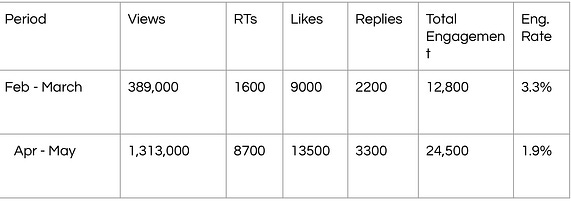
The agency started in April 2025, so I compared Feb–Mar (before) with Apr–May (after).
I collected and verified data
For this analysis, I focused on impressions, engagements (likes, retweets, comments), and follower growth. I exported raw data from X, but this can be inaccurate sometimes. So, I cross-checked the numbers with my weekly X performance reports.
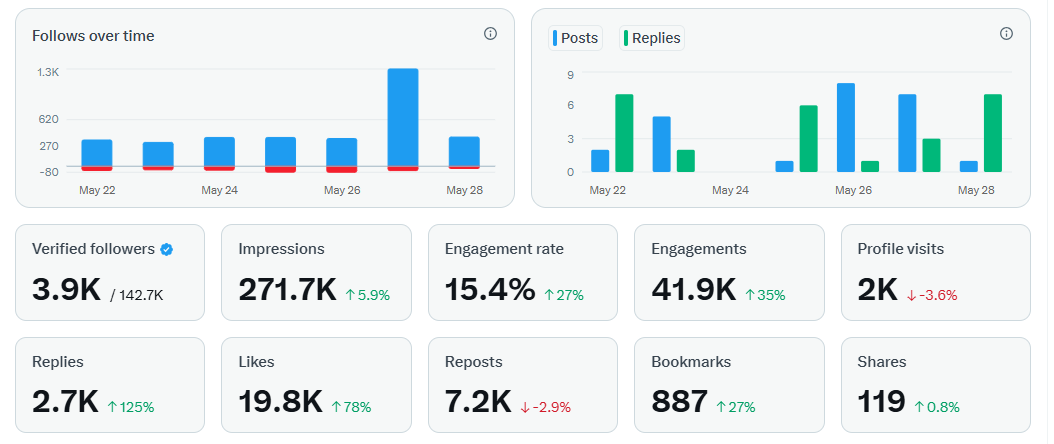
These weekly reports track the top and lowest performing posts along with weekly follower changes. They helped me confirm the raw data and saved time because I could build on work I had already done instead of starting from scratch.
For this report, I also reviewed Peplon’s follower base and engagement as of the last week of March.


What the Data Showed
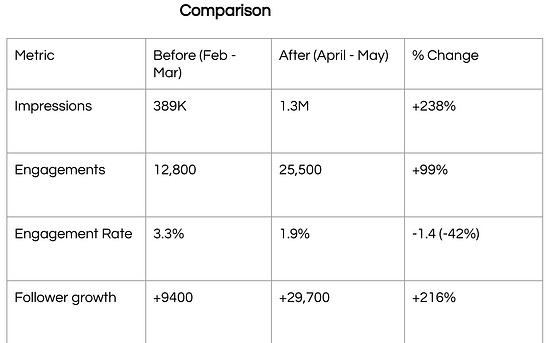
- Impressions: +238%
- Followers: +216%
- Engagements: +99%
- Engagement Rate: Slight drop (expected when reach grows faster than audience engagement).
The Key Insight
The outreach strategy was creating measurable impact, so we renewed the contract based on evidence, not opinions.
The data also revealed a new challenge: while reach and followers grew, engagement per follower dropped. This gave us the next area to focus on.

Conclusion
Before you drop a marketing tactic, check if it’s actually helping your business. Industry reports and expert opinions can be useful, but they shouldn’t be your only guide. The real test is in your own data: compare before and after, and measure what changed.
Marketing will always have critics. You’ll hear things like “outreach doesn’t work,” “ads don’t pay off,” or “organic is dead.” Some of those points may have truth in them. But the key question is: does this XYZ strategy work for your business?
For Peplon, the answer was yes. X outreach was worth continuing. For you, it might be different. The important thing is to let data guide your decisions, not guesswork.